
Think about how you planned your last trip. You probably started on Google, moved to Instagram, watched a few videos, and read some reviews, all before contacting anyone. That entire journey happened through content. And your potential customers are doing the exact same thing right now.
Over 90% of travellers do all their holiday research online. 72% of all travel reservations worldwide are now made digitally. If your travel business is not producing content that shows up during that research phase, you are missing customers who were already looking for you.
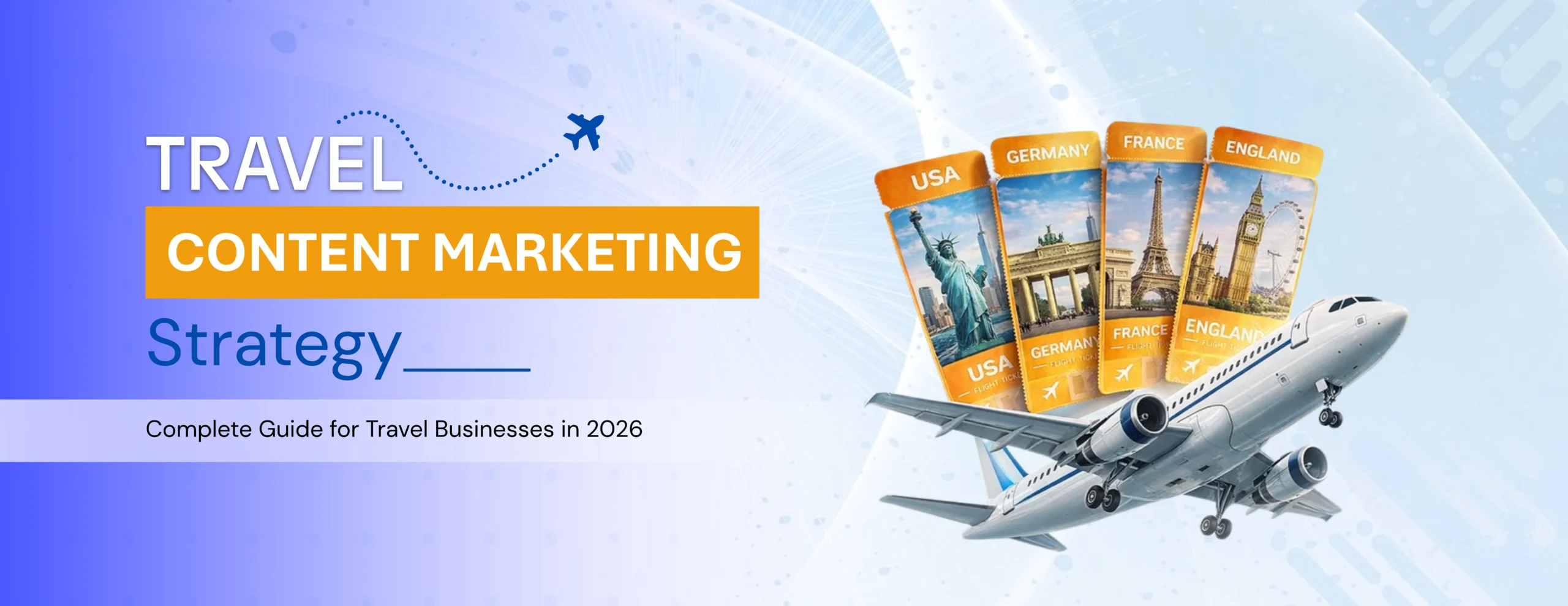
A strong travel content marketing strategy is no longer optional. It is the difference between a travel business that grows consistently and one that depends entirely on paid ads and referrals. In today’s competitive digital landscape, effective digital marketing for the travel industry goes far beyond ads; it combines SEO, social media, content, video, and trust-building strategies that influence travellers long before they make a booking
This guide covers everything you need to build one that works.
What is Travel Content Marketing Strategy?
Travel content marketing is the practice of creating useful, inspiring, or informative content to attract travellers, build trust, and convert them into customers, without directly selling to them. A travel content marketing strategy is the structured plan behind that content. It decides who you are talking to, what you are saying, which platforms you are using, and what each piece of content is meant to achieve.
In the travel industry, this strategy covers the full customer journey, from the moment someone starts dreaming about a trip to the point they book, and even after they return. Every stage of that journey is a chance for your content to be genuinely helpful.
The core difference between content marketing for travel and other industries is simple. You are not selling a product, you are selling a feeling, an experience, a memory. That changes how you write, what you film, and how you show up online.
Why Content Marketing is Important for the Travel Industry
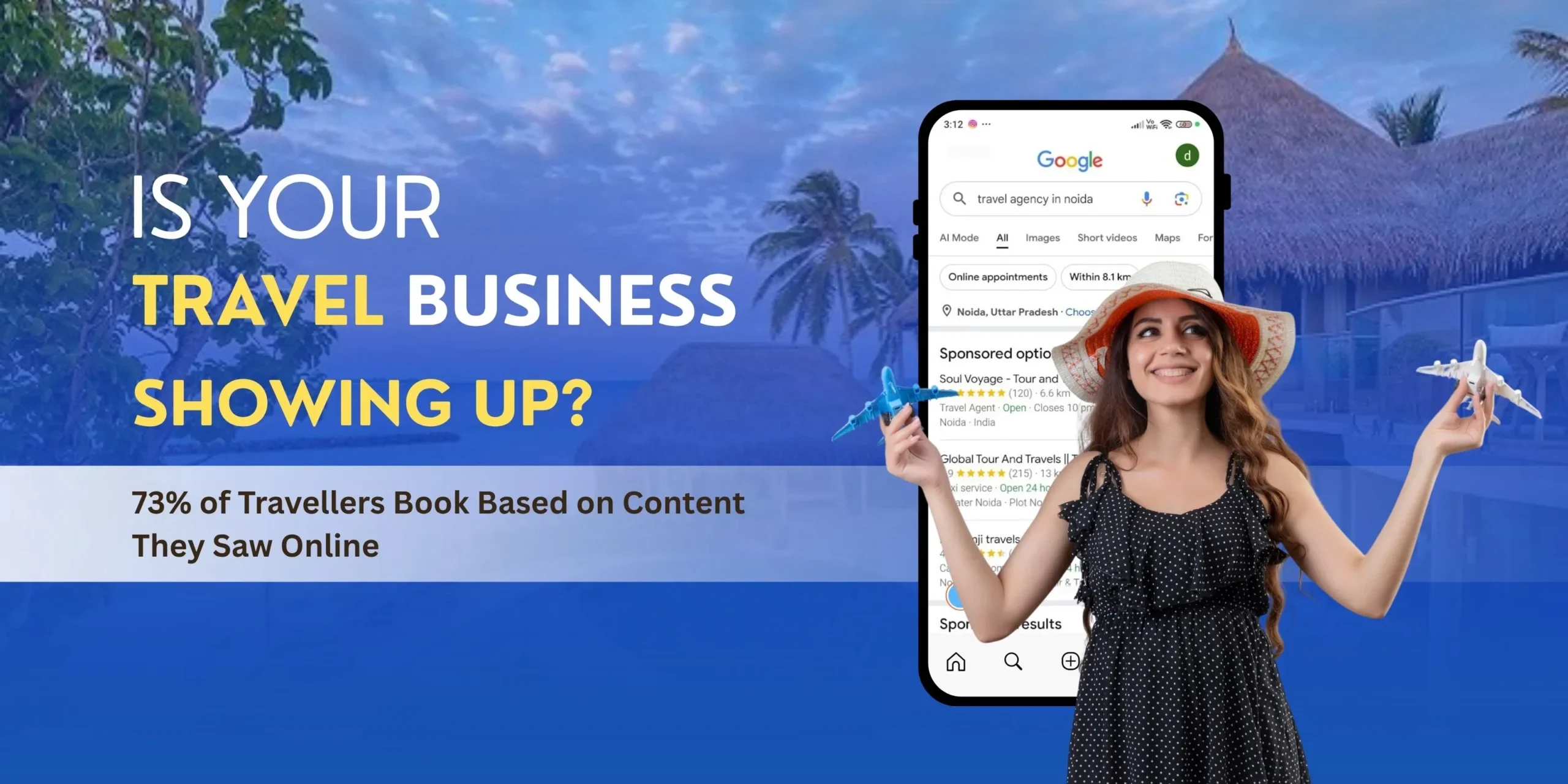
Today’s travellers research for weeks before booking. They compare options, watch videos, check reviews, scroll Instagram, and by the time they contact a travel agency, they have already decided who they trust. Tourism content marketing builds that trust before the conversation even begins.
The numbers are clear. Social media has a greater influence on travel destination choices than TV, news, or even recommendations from friends. 73% of travellers say influencer recommendations have directly led to a booking decision. And 84% say user-generated content influences their choices more than traditional advertising.
For content marketing for travel agencies specifically, it is also the most cost-effective lead generation tool available. Content marketing generates over three times as many leads as outbound marketing and costs 62% less. Unlike paid ads that stop working the moment you stop spending, good content keeps bringing in traffic and bookings for months and years.
Types of Content Marketing for Travel Businesses
Blog Content
A good travel blog answers the exact questions your potential customers are already searching on Google. Destination guides, itineraries, and travel tips attract high-intent visitors. Businesses with active blogs get 55% more website visitors than those without one. At BRB Digital, we create SEO-focused travel blog content that ranks on Google, attracts qualified travellers, and turns search traffic into real enquiries.
Video Content
Video is the most powerful format in travel. A 30-second destination reel can inspire more bookings than a page of descriptions. Short-form video currently delivers the highest ROI of any content format in 2026.
Social Media Content
This is where travel discovery happens. Instagram sees over one million travel-related hashtag searches every week. Regular reels, carousels, and stories keep your brand visible and build the kind of aspirational presence that makes people want to travel with you. At BRB Digital, we build strategic travel social media content, from reels to carousels, that keeps your brand visible and drives consistent engagement.
Destination Guides
Detailed destination guides rank well on Google and establish your expertise. A comprehensive guide on where to go, what to eat, and what to avoid builds more credibility than any advertisement.
User-Generated Content
Real photos and videos from past travellers carry enormous weight. 84% of people trust user-generated content more than branded ads. Encouraging customers to tag your brand gives you a continuous stream of authentic, free content.
Best Travel Content Marketing Strategies
SEO Content Strategy
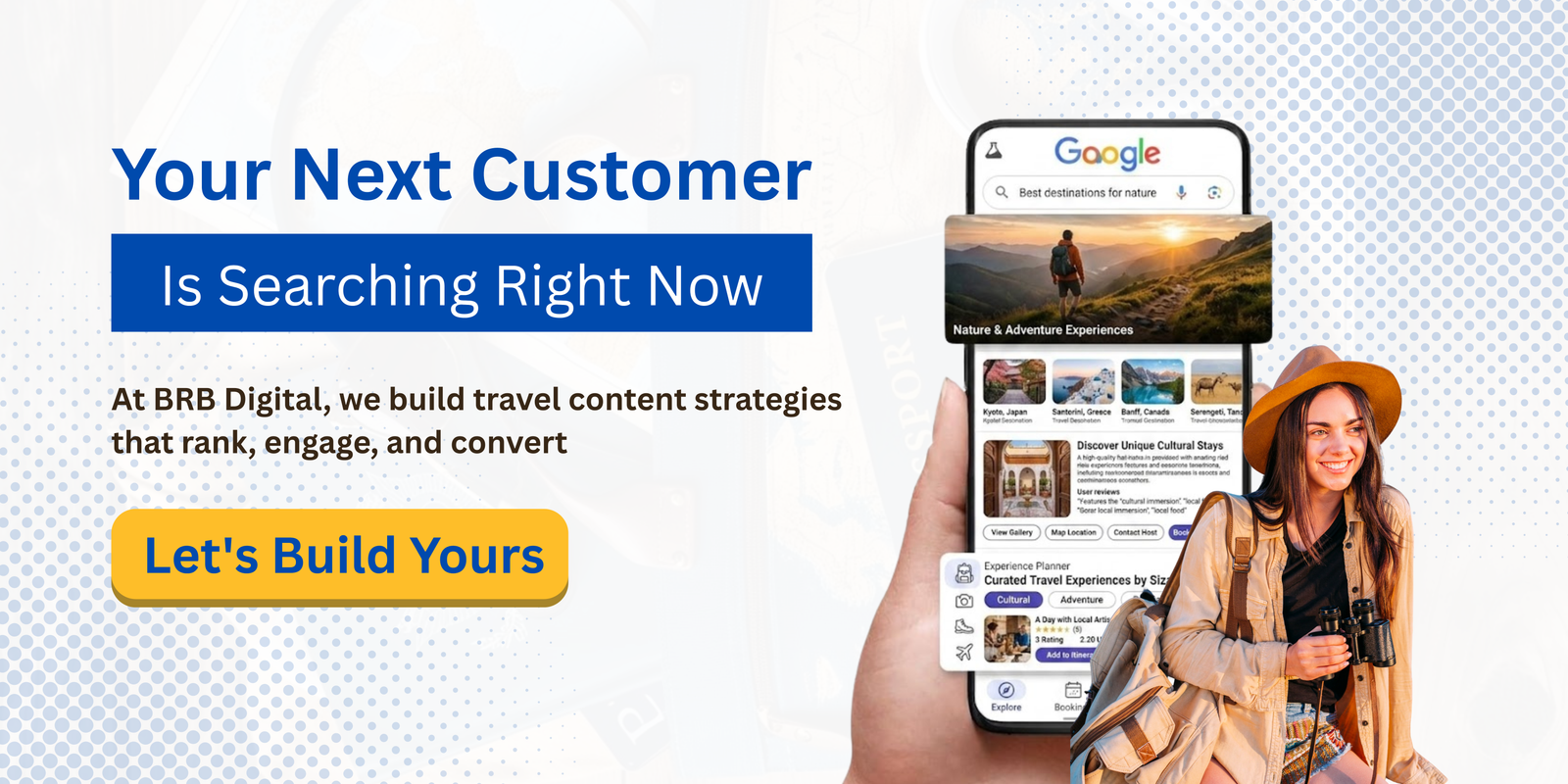
SEO is the foundation of any content marketing strategy for the travel industry. Travellers search for specific things, not broad terms. Someone planning a Rajasthan trip types ‘best time to visit Jaisalmer’, not just ‘India travel.’ Build content around specific, high-intent keywords, and you get found by the right people at exactly the right moment. At BRB Digital, our SEO content strategies are built to help travel businesses rank for high-intent searches and generate long-term organic leads.
Storytelling Marketing
People do not book trips because of feature lists. They book because something made them feel something. A first-person story about a sunrise trek or a family reunion on a beach holiday creates emotional connections that no sales pitch can replicate. Make storytelling central to your content, not an afterthought.
Influencer Marketing
Working with travel influencers, particularly micro-influencers with engaged niche audiences, is one of the most effective ways to reach new travellers authentically. A creator with 20,000 highly engaged followers who genuinely trusts your brand will consistently outperform a generic cold audience ad.
Email Marketing
Not every traveller is ready to book the moment they discover you. Email keeps you in front of them, sharing destination inspiration, seasonal deals, and travel tips, so when they are ready, you are the first name they think of.
Video Marketing
In 2026, 91% of businesses use video as a marketing tool, and in travel, it is non-negotiable. Destination reels, virtual property tours, and genuine customer testimonials build a visual brand that travellers recognise and trust across YouTube, Instagram, and your website. At BRB Digital, we create high-converting travel video content, including destination reels, testimonial videos, and promotional campaigns that inspire bookings.
How to Promote Travel Business with Content Marketing
Knowing how to promote your travel business with content marketing comes down to five clear steps. Define your audience precisely; a luxury honeymoon brand needs content that’s completely different from a budget backpacking service. Choose the right channels: Instagram and YouTube for discovery, Google and blog for search traffic, and email for conversion. Build a content calendar around travel seasons and booking windows. Publish consistently because content compounds over time. And track results honestly, double down on what drives enquiries and stop producing content that serves no goal.
Travel Marketing Content Ideas That Drive Engagement
- In-depth destination guides covering things to do, where to eat, the best time to visit, and local customs.
- Ready-to-use itineraries like 5 days in Kerala or 7 days in Europe that make planning feel simple.
- Practical tips covering visa requirements, budget breakdowns, packing lists, and safety advice.
- Real customer stories and reviews with specific details that build instant credibility.
- Seasonal content tied to current trends: best places to visit during Diwali, solo travel options for women, and family summer holidays.
Travel Content Marketing Examples
The best travel content marketing examples all share one quality: they tell a story rather than sell a product.
TripAdvisor built one of the world’s most trusted travel platforms entirely around user stories and authentic traveller content. Their destination-specific blog content ranks consistently on Google because it answers exactly what travellers are searching for.
Lonely Planet produces immersive videos filmed on location featuring real stories from real people. That authenticity is precisely what makes their content compelling, shareable, and trusted globally. The lesson is the same every time: lead with the experience, let the content do the selling quietly.
Travel Blog Content Strategy
A travel blog is one of the most valuable long-term assets a travel business can build. Start with keyword research; look for specific, high-intent terms that your audience actually searches for. Long-tail keywords like ‘family resorts in Goa under 10,000 per night’ bring more qualified traffic than broad terms like ‘Goa travel.’
Build your content calendar around travel seasons and booking windows. If you run a winter destination, start publishing in September and October, before people begin planning. Content takes time to rank, so publish ahead of demand. Optimise every post with a clear heading structure, naturally placed keywords, internal links, and a strong call to action. SEO without quality content does not work. Quality content without SEO gets no traffic. You need both working together.
Challenges in Travel Content Marketing
- High competition: Major platforms dominate broad travel searches. The solution is specificity, hyperlocal content, and niche-audience guides, which cut through more effectively than generic content.
- Seasonal demand: Travel is inherently seasonal. A content calendar that builds audience interest during off-peak periods is essential for maintaining consistent year-round traffic.
- Content saturation: There is already an enormous amount of generic travel content online. Original research, local expertise, and genuine storytelling are your strongest differentiators.
Latest Trends in Travel Content Marketing in 2026
- AI-assisted content creation: 87% of marketers now use AI in their content workflows to improve efficiency, but authentic human storytelling still drives results in travel.
- Short-form video dominance: Highest ROI content format in 2026. A 30-second destination reel consistently outperforms static posts for reach, saves, and booking intent.
- Hyper-personalisation: Travellers expect content that speaks to their specific style, budget, and interests. Segmented email campaigns and audience-specific social content are now standard for competitive travel brands.
- Voice search optimisation: With more people using voice assistants for travel queries, conversational content that answers specific questions directly is increasingly important for visibility in the digital marketing for the travel sector.
Conclusion
Every trip begins with a search, a scroll, a video, or a story. The travel businesses that build consistent, quality content around that journey are the ones filling bookings year after year, not the ones spending the most on ads.
A strong travel content marketing strategy is not about being everywhere. It is about consistently being in the right place, with the right message, for the right audience. Start implementing your strategy today and build the kind of digital presence that turns curious travellers into loyal customers.
At BRB Digital, we help travel businesses build complete content strategies from SEO blog content and social media to video and email that attract the right audience and drive real bookings. Reach out to our team, and we will take it from there.
FAQs
What is travel content marketing?
Travel content marketing is the creation of blogs, videos, guides, and social content to attract potential travellers and convert them into customers without relying purely on paid advertising. It builds trust across the entire customer journey.
How to promote a travel business online?
Start with a clear audience, build SEO-optimised blog content around what they search for, invest in short-form video on Instagram and YouTube, post consistently on social media, and maintain an email list you nurture over time. Consistency across channels is more important than volume on any single one.
What content works best for the travel industry?
Short-form video delivers the highest ROI. Destination guides and itinerary-based blogs drive consistent organic traffic from Google. User-generated content builds trust most effectively. A combination of all three produces the strongest overall results for any travel business.