
Think about the last time you planned a trip. You probably didn’t walk into a travel agency first. You Googled something. Scrolled Instagram. Watched a few Reels of that destination. Read some reviews. Maybe clicked on an ad. That whole process? That’s digital marketing for travel industry working on you, and your customers go through the exact same thing before they book.
Most Travel Agency have great packages, genuine expertise, and happy past clients, but online, they’re invisible. Online marketing for travel agencies fixes that, but only if it’s done with a clear strategy. Someone searching for a Bali honeymoon package or a family trip to Europe isn’t finding them.
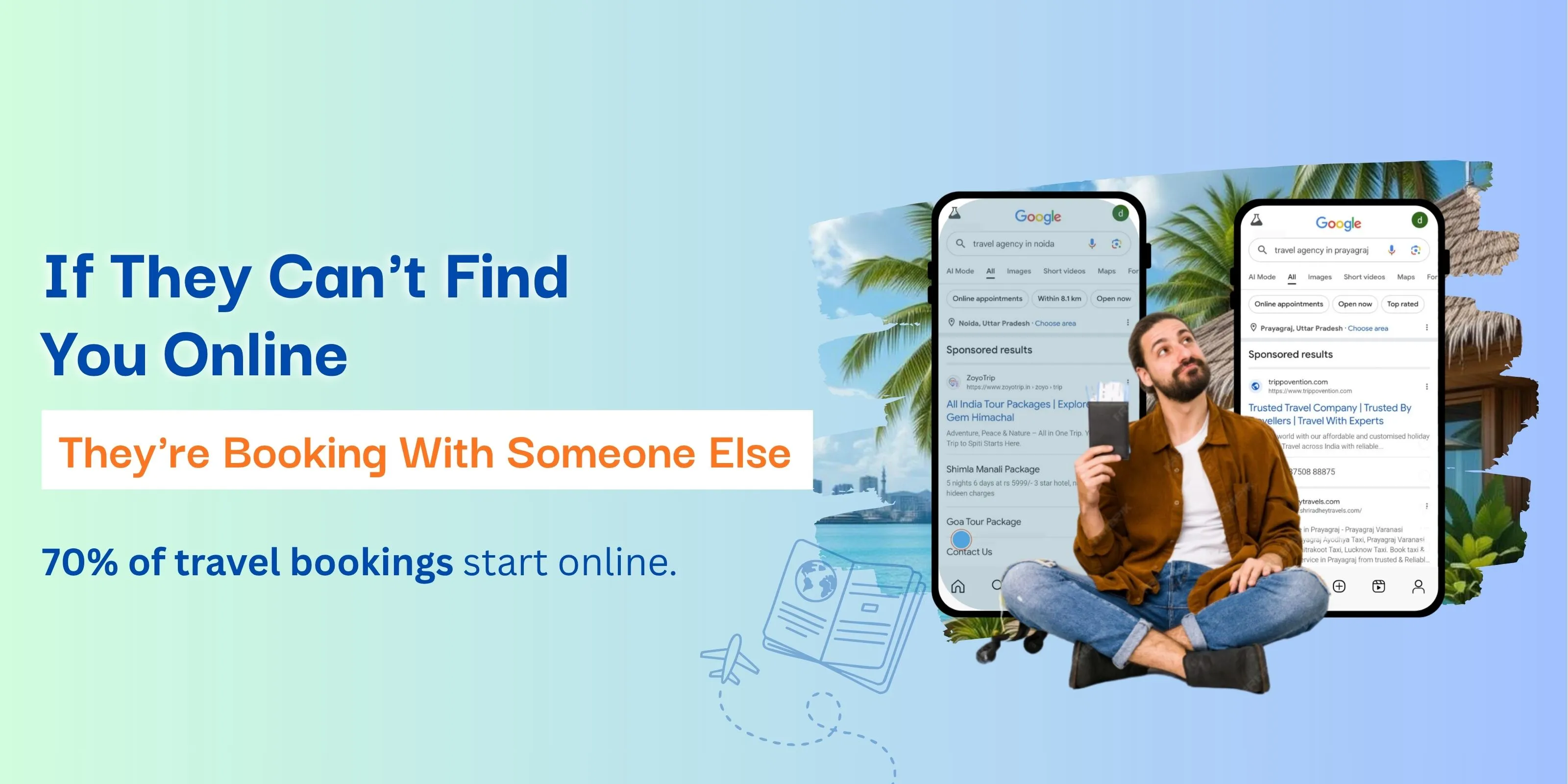
Over 70% of all travel bookings now start and end online. That’s not a trend anymore. That’s just how the travel industry marketing works. And for any travel agency serious about growth, digital marketing for the travel industry is no longer an option for you.
Why Digital Marketing Matters for Travel Industry.
Most travel agency owners aren’t marketing experts. You got into this business because you love travelling and you’re good at planning trips. But at some point, referrals slow down. Walk-ins drop. And you realise the agencies picking up new clients every month are the ones who figured out digital marketing.
Here’s why digital marketing for the travel industry is worth understanding properly.
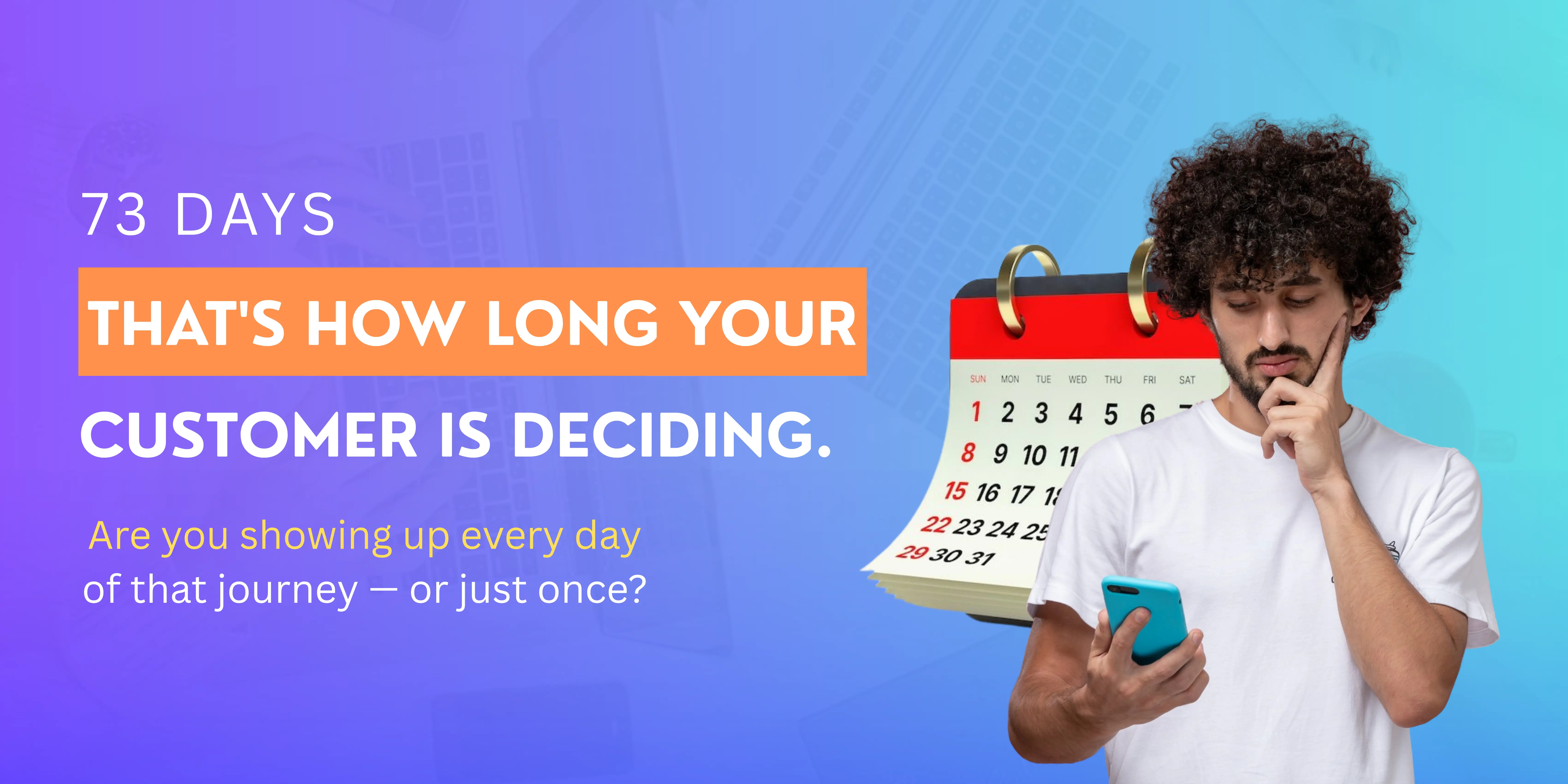
People research extensively before they book. On average, travellers spend about 73 days from the moment they start researching until they confirm a booking. During those 73 days, they’re reading blogs, comparing prices, watching videos, and checking reviews.
Trust is built online now, not just in person. A decade ago, a recommendation from a friend or a good location was enough. Today, people Google you before they call you. They check your website, look at your social media, and read reviews and feedback. Digital marketing for tourism businesses runs on that trust.
You can target people who are actually ready to book. That’s the real power of travel industry marketing. You’re not targeting everyone; you’re showing up for people who are actively searching for what you offer.
The results are measurable. Unlike putting up a flex banner or running a newspaper ad, digital marketing shows you exactly what’s working. How many people clicked? How many enquired? What they searched before they found you. That data helps you spend smarter and grow faster, & Tourism digital marketing gives you that clarity.
Top Travel Marketing Strategies for Travel Industry.

1. Search Engine Optimisation (SEO)
SEO is probably the most misunderstood part of digital marketing for the travel industry. Most agency owners have heard of it. Few have actually worked it properly. Getting this right is the foundation of any serious travel industry marketing plan.
Here’s the simple version: when someone types “honeymoon packages in Maldives” or “best travel agency in Pune” into Google, SEO determines whether your website shows up. If you’re on page one, you get clicks. If you’re on page three, you might as well not exist.
Start with the right keywords. Think about what your customers actually type, not what sounds professional. “Affordable Europe tour from India” will get you more relevant traffic than “European travel solutions”. Use both broad terms, like “travel marketing strategies”, and specific ones, like “10-day Southeast Asia itinerary under 80,000 rupees”. The specific ones usually bring in people much closer to the booking stage.
Write destination and travel blogs. This is where most agencies give up too quickly. A blog post like “First Time Travelling to Japan? “Here’s What Nobody Tells You” doesn’t just drive organic traffic; it positions you as someone who actually knows what they’re talking about. Google rewards consistent, helpful content.
Don’t ignore local SEO. If someone near you searches “travel agency near me” or “tour operator in Bangalore”, your Google Business Profile is what shows up. Fill it out completely. Add photos of your team, past trips, and the office. Collect reviews from happy clients. This is free, and often the fastest SEO win for smaller agencies. Local SEO is genuinely one of the most overlooked areas of online marketing for travel agencies.
2. Social Media Marketing
Travel and social media are made for each other. The problem is that most agencies use social media incorrectly; they post tour packages, write “Call us to book”, and wonder why nobody engages.
Social media for travel agencies isn’t a brochure. It’s a window into the experiences you create. That shift in thinking is what separates good tourism digital marketing from agencies that just post and hope.
Reels and short videos are everything right now. A 30-second video of a sunset in Santorini, a street market in Bangkok, or a quiet morning in the hills of Coorg, that kind of content gets reach. It gets saved. It gets the “where is this?” comments that turn into DMs that turn into bookings. 75% of travellers say they visited or plan to visit a destination they first discovered on social media.
Tell stories, not specs. Nobody shares a post that says “7 nights, 8 days, Bali package at ₹85,000.” But people do share posts that say, ‘Our clients asked for something unique for their 10th anniversary. Here’s what we created: show the planning behind the trip. Show the reaction when they arrived. Show what makes your agency different from a booking engine.
Work with micro-influencers. Big travel influencers with millions of followers are expensive and often disconnected from their audience. Micro-influencer creators with 10,000 to 80,000 engaged followers tend to have real relationships with their audience. For online marketing for travel agencies with smaller budgets, this is often a better investment than big paid campaigns
3. PPC – Paid Advertising That Gets Immediate Results
SEO is a slow build. Paid advertising is the opposite; you can be visible on Google tomorrow if you want to. That’s what makes paid ads one of the fastest-moving tools in digital marketing for tourism.
Google Ads for travel packages puts your agency at the top of search results when people look for exactly what you offer. If someone types “Europe tour package from Delhi”, and you have an ad targeting that phrase, you show up before any organic result. You’re paying for that placement; you’re only paying when someone clicks, and clicks from that kind of search have high booking intent.
Retargeting is where the real money is. Most people who visit your website don’t book on the first visit. They look around, get distracted, and close the tab. Retargeting ads follow people on Instagram, YouTube, and news websites and bring them back. Given that travellers typically take over two months from their first search to booking, staying visible during that whole decision period matters more than most agencies realise.
4. Content Marketing
If paid ads are the sprint, content marketing is the marathon. It takes longer, but the results compound in a way no ad budget can match. Content is one of the most underrated travel marketing strategies available to smaller agencies.
Destination guides and travel blogs are your most powerful long-term SEO and authority tools. A well-written article like “Planning a Sri Lanka Trip? Here’s Everything You Need to Know” will rank on Google for years, attract travellers at exactly the moment they’re researching, and position your agency as the expert they should trust with their booking.
Video content goes further than most agencies expect. 91% of businesses globally now use video marketing, and in travel, where the product is inherently visual and emotional, video does things that written content simply cannot. In digital marketing for tourism, video is the closest thing to actually showing someone what it feels like to be there. A 90-second clip showing what a trip you organised actually looked and felt like – the food, the laughs, and the landscapes – is more persuasive than any amount of text about your packages.
Ask clients to share their trip online. User-generated content, real photos and videos posted by your actual customers, is worth more than anything you can create yourself. A genuine Instagram post from a happy traveller saying, “this agency planned everything perfectly”, carries more trust weight than any paid ad.
The Real Challenges in Travel Digital Marketing.
Travel agencies face genuine challenges in digital marketing for the travel industry that are worth knowing before you dive in, and the travel industry has real constraints that generic marketing advice never covers.
Demand is seasonal and unpredictable. Summer bookings, the holiday season, wedding travel, and school breaks all cause demand spikes at certain times. The biggest mistake is advertising at peak season when customers have already decided. So, start campaigns 2 to 3 months before your busy periods, when people are just beginning to plan. Timing is everything in digital marketing for tourism.
The competition isn’t just other agencies. You’re competing with MakeMyTrip, Booking.com, and Expedia, platforms with crores in ad spend. You can’t outspend them. But you can out-specialise them. Content is one of the most underrated travel marketing strategies available to smaller agencies. A family of four in Coimbatore searching for a custom 12-day Europe itinerary doesn’t just want a booking engine; they want someone who’ll actually plan the trip.
How people travel and how they decide are changing fast. Travellers today research, trust, and book differently than they did three years ago. They’re influenced more by short videos than by brochures. They trust micro-creators more than celebrity endorsements. They expect personalisation, not generic packages.
Future of Digital Marketing for Travel Industry.
AI is changing how people discover travel. Over 60% of Gen Z and Millennials now use AI tools to research destinations and build itineraries. This isn’t just about ChatGPT giving travel advice; it means your agency’s content needs to be optimised for how AI search tools surface information, not just for how Google crawls pages. It’s a new layer of digital visibility that most agencies haven’t started thinking about yet. Most agencies haven’t started thinking about it yet; it’s the next frontier of digital tourism marketing.
Short videos are becoming increasingly dominant. Instagram Reels and YouTube Shorts – short-form video is now the primary way for people to discover travel inspiration. The travel hashtag on Instagram has over 700 million posts. Given the intense competition, the agencies that consistently deliver genuine, story-driven content still cut through.
Personalisation is becoming table stakes. Over 80% of travellers say they actively want personalised experiences and communication from travel companies. That means sending the same newsletter to your entire list and running the same ad to everyone is increasingly ineffective. Segmented campaigns, personalised follow-ups, and offers based on what people have actually shown interest in – that’s the direction travel marketing is going. And it applies to every part of digital marketing for tourism — not just email.
Client Reviews and Feedback Videos Are Becoming a Booking Tool. Most travel agencies treat Google reviews as an afterthought. That’s a mistake. When someone finds your agency online, the first thing they do is check what past clients say. A well-maintained Google Business Profile with consistent, genuine reviews builds more trust than any ad you can run. In online marketing for travel agencies, your reputation is your most powerful ranking signal. But it’s going beyond text reviews now. Short feedback videos from real clients — a 30-second clip of someone saying “everything was perfectly planned” — carry far more weight than a five-star rating
Conclusion
Digital marketing for the travel industry isn’t optional anymore. It’s just part of how the business works. The travel marketing strategies you build today will determine who finds you a year from now.
The agencies growing steadily right now aren’t necessarily the ones with the best packages or the most experience. They’re the ones who figured out digital marketing for the travel industry before everyone else did, which builds trust before the first call and stays top of mind throughout the weeks a customer spends deciding.
If you’re a travel agency that wants to grow online but isn’t sure where to start, especially with online marketing for travel agencies getting more competitive every year, or you’ve tried a few things and nothing has worked yet, that’s exactly the kind of problem BRB Digital helps solve. We work with travel businesses from tourism digital marketing strategy to paid campaigns & to build marketing that drives real bookings, not just better-looking Instagram profiles. That’s what effective travel industry marketing actually looks like.
Let’s figure out what growth looks like for your agency. Get in touch.