
You might have a great product, a professional website and an active Instagram account, yet still wonder why enquiries are inconsistent. The problem is often not the effort you put into marketing. It is how your activities fit together. Search brings one kind of visitor, social media starts another conversation, and a confusing website can lose both.
Understanding a six-part marketing framework helps you connect those activities to a clear business goal. Instead of choosing platforms because competitors use them, you can build a practical system for attracting people, earning trust and converting interest into sales.
What Are the Main Pillars of Digital Marketing?
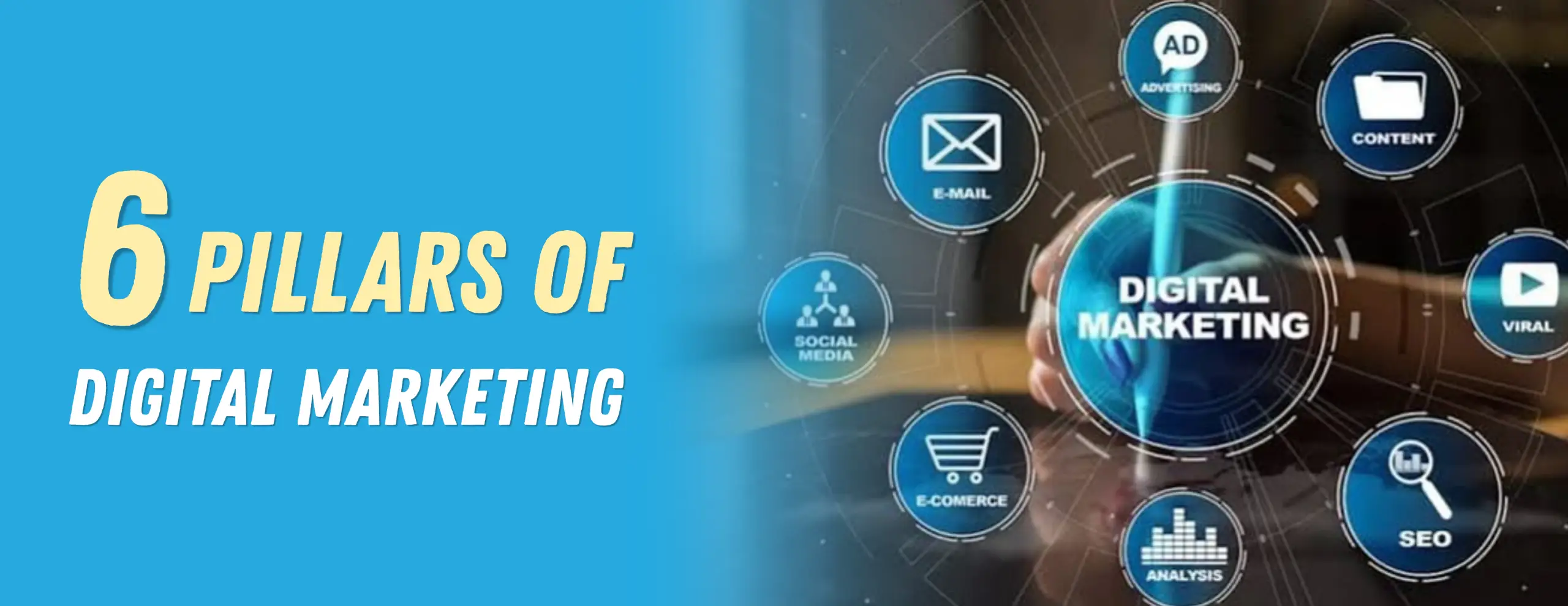
The six main pillars of digital marketing are search engine optimisation (SEO), content marketing, social media marketing, pay-per-click (PPC) advertising, email marketing and conversion rate optimisation (CRO). Think of them as connected responsibilities rather than six separate departments. Some help customers discover your business. Others explain your offer, encourage action or develop relationships after a first purchase.
There is no universal law that says every business must organise marketing into exactly six categories. This is a useful planning model, not a Google ranking requirement. Your priorities will depend on your customers, buying cycle and budget. A neighbourhood café might focus first on local discovery and social content, while a business software provider may need educational articles, search visibility and lead nurturing.
The 6 Pillars of Digital Marketing Explained
1. Search Engine Optimisation (SEO): Be Visible When People Search
SEO helps search engines understand your website and helps potential customers find useful pages through unpaid search results. It involves technical accessibility, relevant content, internal navigation and trust-building information. Unlike an advertisement that stops receiving paid exposure when its budget ends, a helpful page can continue attracting visitors, although rankings and traffic are never guaranteed.
Imagine a home services company serving Noida. Someone searching for an appliance repair service wants clear availability, service coverage and contact details, not a vague homepage. A dedicated page that explains the service, answers common questions and loads well on mobile meets that need more directly.
Start by checking whether important pages can be crawled and indexed. Then map one primary search intent to each page, improve titles and descriptions, and connect related pages with descriptive links. Monitor organic clicks and enquiries in Google Search Console and your analytics setup. If organic search is a priority, explore BRB Digital’s SEO services to understand the work involved.
2. Content Marketing: Answer Questions Before Customers Ask
Content marketing turns customer questions into useful articles, videos, guides, examples and resources. Good content does more than mention keywords. It helps a visitor make a decision, compare options or solve a problem.
Consider a restaurant owner planning a new outlet. Before hiring an agency, the owner may search for launch promotion ideas, photography tips or ways to increase repeat visits. A practical guide with a sample promotional calendar is more useful than a generic article praising digital advertising.
Build a topic list from real questions heard in sales calls, messages and customer conversations. Group questions by intent, create original answers and add examples only when they are accurate. Update pages when information changes. Track engaged visits, assisted enquiries and conversions rather than judging success solely by published article counts. BRB Digital also offers content writing services for businesses building a stronger information library.
3. Social Media Marketing: Build Recognition and Conversation
Social media helps brands show their personality, demonstrate products and interact with communities. Instagram may suit visual products and restaurants; LinkedIn may be more appropriate for professional services.
Picture a café sharing a short behind-the-scenes video of its breakfast preparation. The video creates familiarity. A follow-up post explaining the menu and a clearly visible booking or directions link make the next step easier.
Choose two or three repeatable content themes: education, proof of work, customer questions or product demonstrations. Keep a consistent visual identity, respond to genuine enquiries and check which posts generate profile visits, qualified messages and website actions. Avoid buying engagement or making unsupported claims. BRB Digital’s social media marketing service covers the planning and execution side of this pillar.
4. Pay-Per-Click Advertising: Reach Relevant Buyers Faster
PPC advertising places paid messages in front of selected audiences, usually through search or social advertising platforms. Search ads can reach people expressing immediate intent. Social ads can introduce an offer to a relevant audience or reconnect with visitors who previously showed interest, subject to platform rules and privacy choices.
For example, a new coaching centre may advertise admissions during a specific enrolment window. A useful campaign sends interested people to a page with course details, location, fees where appropriate and an enquiry form. Sending everyone to an unrelated homepage wastes attention and can make performance harder to measure.
Before spending, define what counts as a qualified conversion: a booked consultation, purchase or valid enquiry. Set realistic geographic targeting, use clear creative, review search terms where applicable and measure cost per qualified result. Paid campaigns work best when the landing page, offer and follow-up process are ready. Learn more about BRB Digital’s Google Ads services if you are evaluating search advertising.
5. Email Marketing: Turn Interest Into Ongoing Relationships
Email marketing gives businesses a direct, permission-based way to share useful updates with people who have chosen to hear from them. It can support new enquiries, existing customers and repeat purchases without relying entirely on social media distribution.
Suppose a home décor brand offers a helpful room-planning checklist. Subscribers might later receive decorating tips, an explanation of suitable products and occasional offers. The sequence should match the interests people expressed when signing up. Someone who requested advice should not immediately receive endless aggressive sales messages.
Collect consent clearly, describe what subscribers will receive and make unsubscribing straightforward. Segment audiences by meaningful needs rather than emailing everyone identical promotions. Evaluate useful actions such as qualified replies, purchases and repeat orders alongside delivery and engagement metrics. When done well, email supports the journey after discovery and reminds customers why they initially trusted your brand.
6. Conversion Rate Optimisation (CRO): Make the Next Step Easier
CRO improves the share of visitors who complete a valuable action. If the website confuses people, buying more traffic will not solve the underlying experience problem.
Imagine two landing pages for the same local service. The first uses a vague headline, hides the phone number and asks for too many form details. The second clearly describes the service, shows the areas covered and makes its contact option easy to find. The second page may be easier to use, but the difference should be verified through actual customer behaviour or testing rather than assumed.
Review page speed, mobile usability, form friction, headline clarity and trust signals. Use analytics, session research or controlled experiments when traffic permits. Make one meaningful change at a time and measure completed actions, lead quality and business outcomes. CRO supports every other pillar because it helps existing visitors take the next sensible step.
Pillars, Types and Channels: What Is the Difference?
People often use the phrases ‘types of digital marketing’, ‘components of digital marketing’ and ‘marketing channels’ interchangeably. A practical distinction makes planning easier: pillars describe capabilities, channels describe where campaigns run, and tactics describe what you do on those channels. SEO is a pillar; Google Search is a discovery surface; improving a service page is a tactic. Social media is a pillar; Instagram is a channel; publishing a product demonstration is a tactic.
Other classifications also include influencer marketing, affiliate marketing, video or mobile marketing as separate types. It simply groups related work at a different level. Choose the structure that helps your team assign responsibility, set budgets and evaluate outcomes without duplicating tasks.
How the Six Pillars Work Together
Consider a neighbourhood restaurant promoting a weekday lunch menu. A useful blog article could explain what makes the menu special. Search visibility could help people discover it. Instagram content could show real dishes, while a targeted campaign could reach nearby diners. An opt-in email list could share future menus. Finally, a fast page with clear opening hours and an easy reservation or contact option could turn interest into action.
Each touchpoint supports a different stage. The visitor may discover the restaurant through search but decide to visit after seeing its photos. That is why assigning every sale to the last clicked channel can hide the contribution of other work. A sensible review combines channel reports with actual bookings and customer feedback.
The importance of digital marketing becomes clearer when these activities share a goal. More followers, impressions or clicks may be encouraging, but they are supporting indicators. Better-qualified enquiries, bookings, sales and customer retention are closer to business impact.
How to Build a Digital Marketing Strategy in Six Steps
A digital marketing strategy should start with a business problem, not a platform subscription. The following sequence offers a practical way to organise the work.
Step 1 — Define one measurable outcome. Decide whether the next quarter is about store visits, online purchases or qualified enquiries. Specify what will count and who will record it.
Step 2 — Understand your audience. Note the questions customers ask, which areas you serve, the objections they raise and what proof helps them feel comfortable choosing you.
Step 3 — Audit your current experience. Check your website, important search pages, social profiles, existing content and enquiry journey. Fix broken forms and misleading information before increasing promotion.
Step 4 — Select the highest-value pillars. Choose based on intent, competition, available skills and buying cycle. A small business does not need six fully staffed programmes on day one.
Step 5 — Create a realistic publishing and campaign plan. Assign page updates, creative work, campaign budgets, follow-up ownership and review dates. Give each activity a purpose.
Step 6 — Measure and improve. Review qualified actions, cost, customer feedback and content performance regularly. Keep what helps, revise what underperforms and document your learning. For example, track how many enquiries become paying customers rather than only counting form submissions. This helps reveal whether targeting, messaging and sales follow-up are aligned with customer needs.
Common Mistakes That Hold Businesses Back
The first mistake is treating each channel as an isolated project. Ads promise one thing, the website says another, and the sales team never sees campaign context. A second mistake is choosing vanity metrics over customer outcomes. A third is publishing near-duplicate content for every keyword variation. A fourth is expecting immediate results from organic channels while neglecting useful landing pages.
The solution is simple in principle: agree on an offer, communicate it consistently, measure meaningful actions and improve the customer journey.
Build a Connected Marketing Plan With BRB Digital
These six disciplines work best when every activity supports a clear customer journey. Start with the basics: a useful website, a relevant message and a way to measure what happens next. Add channels when they solve a specific problem, not simply because they are popular.
BRB Digital helps businesses connect search, content, social media and performance campaigns through practical, data-informed planning. If you want to identify gaps in your current approach, explore our digital marketing services and discuss the next step for your brand.